Most people hear terms like bot farm or phone farm and assume they’re the same thing. They both involve multiple devices working together, but how they operate — and what they’re actually used for — are quite different. Let’s break it down in a simple way.
What Is a Bot Farm?
A bot farm is basically a network of automated programs running on computers or servers. These “bots” are built to perform repetitive tasks without human help. That might include automating social media actions, testing websites, or collecting data.
Here’s what typically makes a bot farm work efficiently:
- Strong server infrastructure that can handle heavy scripts.
- Stable internet connection with IP rotation.
- Well-written automation code or management tools.
Unlike physical setups, these farms exist mostly in software form. They’re fast, scalable, and great for running digital operations around the clock.
What Is a Phone Farm?
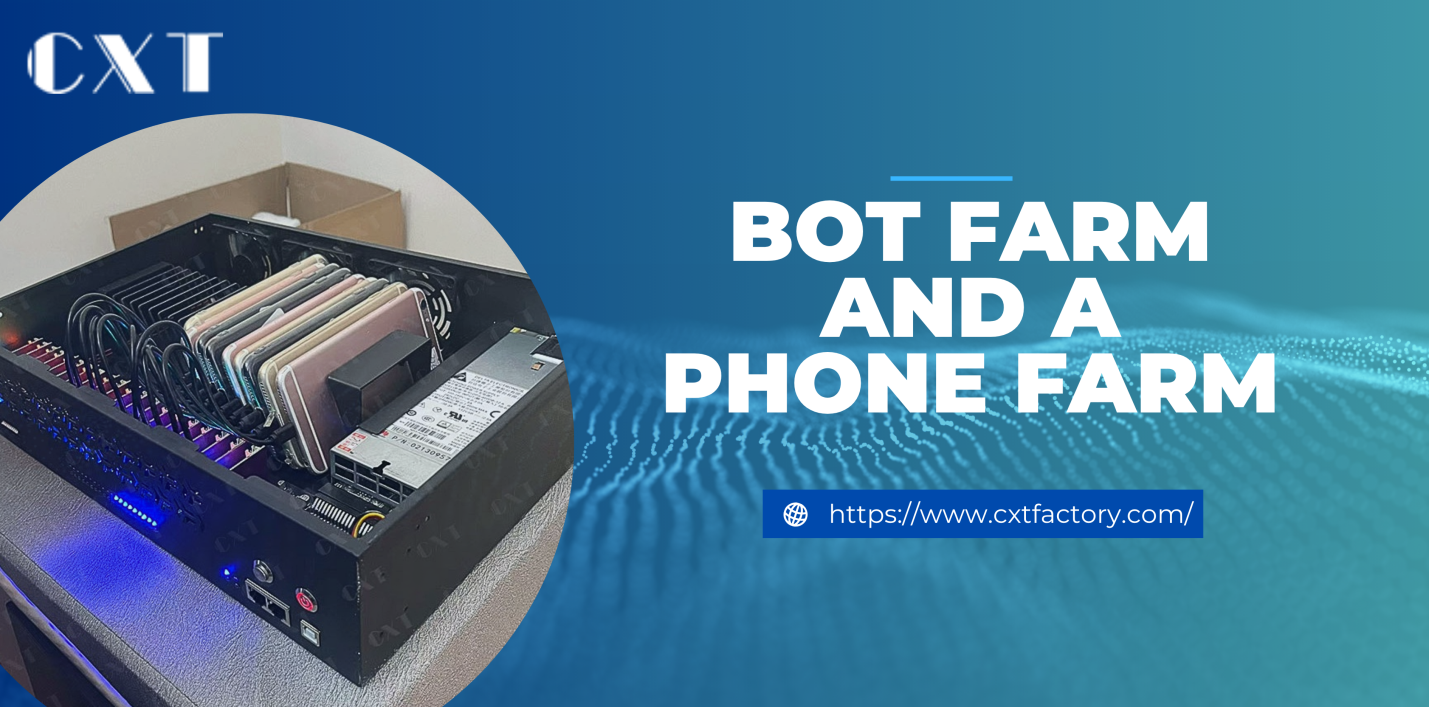
Now, a phone farm is a physical setup of real smartphones — not just virtual bots. These phones are connected through power hubs and managed by specialized hardware, like systems built by Shenzhen CXT Technology Co., Ltd. Each phone can run apps, perform actions, or gather data independently.
You’ll usually find phone farm systems used for:
- Testing app stability across devices.
- Simulating real-world user interactions.
- Marketing research or QA for mobile platforms.
Essentially, where a bot farm is software-based, a phone farm relies on real hardware.
Key Differences You Should Know
Here’s a simple way to understand the differences between these two setups:
- Hardware vs. Software: A bot farm runs entirely on computers; a phone farm uses real devices.
- Speed vs. Accuracy: Bots can process fast, but physical phones show real-user behavior.
- Scalability: Software farms scale easily; phone setups need more hardware and cooling.
- Use Cases: Bots handle automation or analytics, while phones are ideal for mobile testing.
How They Work Together
Interestingly, companies sometimes use both. A bot farm handles backend automation while a phone farm interacts with mobile applications to mirror real conditions. This pairing can save time, detect bugs faster, and generate more reliable results.
Some common best practices when managing either system include:
- Keep your power and cooling stable.
- Regularly check device health or script errors.
- Monitor IPs and prevent detection issues.
- Scale slowly instead of adding dozens of devices at once.
Both require careful setup and maintenance — but once done right, they run smoothly and efficiently.
Final Thoughts
Whether you run a bot farm for automation or a phone farm for mobile testing, both represent smart ways to scale repetitive digital work. The real key lies in how you manage them — balance automation with real-device feedback for the best results.
If you’re looking for reliable systems or hardware to manage multi-device operations, Shenzhen CXT Technology Co., Ltd. offers practical, durable, and scalable solutions designed to keep your setup running at its best.