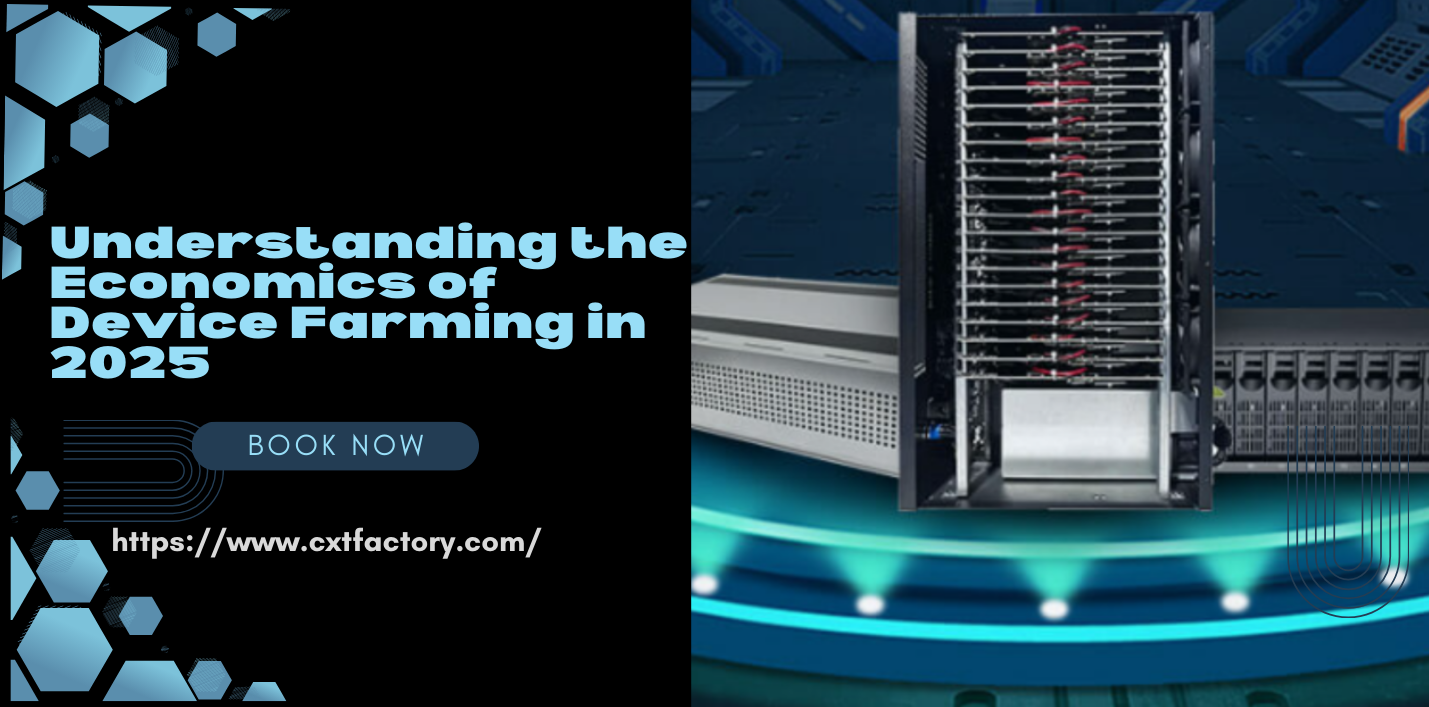
Understanding the Economics of Device Farming
A rising number of companies now invest in a phone farm because they want systems that scale without slowing down. Real device automation delivers better accuracy than simulated environments. This change pushed global testing teams to adopt larger controlled setups. At CXT Factory, we build hardware that supports this shift, including the 32PCS Phone Box , which fits high-volume automation. Phone farming keeps growing because businesses want:
- Faster mobile testing
- Real device reactions
- Automated workflows that run without manual input
- Systems that handle long testing cycles
Cost Breakdown of a Modern Device Farm
1. Hardware Investment
Teams start with strong hardware because it shapes the entire workflow. A modern Phone Farming usually includes motherboard farm boxes that hold multiple boards in one frame. Companies scale from small setups to larger units like the 32PCS phone box based on their workload. Key points include:
- Choosing 12PCS, 20PCS, or 30PCS arrays based on required scale.
- Planning board replacements and cable management.
- Using hardware that supports stable PC control.
2. Power Consumption
Power cost affects long-term planning. Most device farm boxes use around 100 watts. Energy rates increased in many regions, so teams now compare systems based on efficiency. Main considerations include:
- Understanding average watt usage per box.
- Reducing heat to avoid wasted energy.
- Using stable power sources to protect each board.
3. Software and Maintenance
Even efficient farms need upkeep. A phone farm functions best when every board stays responsive and cool. Maintenance costs remain manageable when users follow simple routines:
- Updating control software as needed.
- Checking cables for wear.
- Keeping airflow steady to prevent stress on components.
Energy Efficiency Trends in 2025
Energy efficiency became a top focus in 2025. Better hardware design helps teams run larger systems like the 32PCS Phone Box without high energy loss. This shift is driven by:
- Improved chip efficiency that lowers heat.
- Better ventilation that protects each board.
- Sustainability reports that encourage low-waste systems.
Calculating ROI
A phone farm saves time because it runs many tasks at once. Bulk automation replaces long manual cycles, which raises productivity. Traditional testing with single devices slows the process and increases labor hours. A scaled setup completes the same work in a fraction of the time. Small farms with twelve boards deliver strong returns for new teams. Mid-sized farms with twenty boards support growing projects. Large farms with a 32PCS Phone Box create high value for companies that work with constant automation or heavy testing schedules.
Why More Labs Choose Motherboard-Based Farms Over Full Phones
Pricing plays a major role. Bare motherboards cost less and allow better heat control. A structured array uses less space, which helps labs fit more devices in a smaller area. These advantages explain why more teams choose motherboard-based systems for Phone Farming. At CXT Factory , we focus on hardware that supports this shift with steady performance and simple scaling for long-term use.