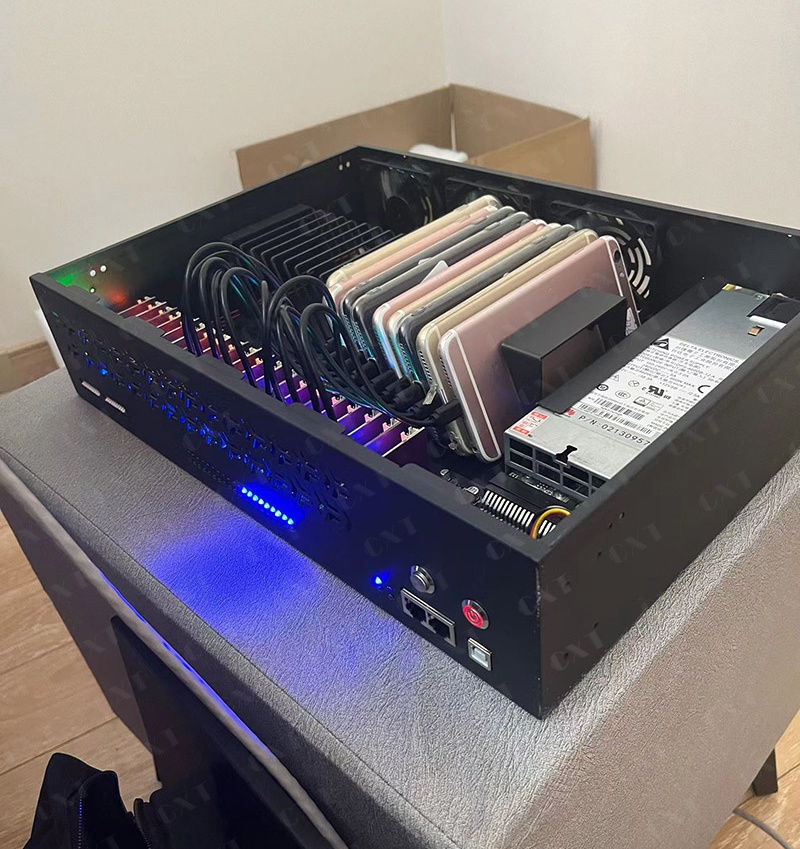
Growth in automation has pushed teams to choose between two paths. Build a cell phone farm using real devices, or rely on a bot farm that runs scripted actions at scale. On the surface, both seem efficient. They reduce manual work and increase output. But once operations grow, the gap between them becomes clear. A cell phone farm reflects real world behavior, while a bot farm focuses on speed through simulation. That difference shows up in performance, accuracy, and long term reliability.
At CXT Factory, we see more teams shifting toward hardware based setups because they want results they can trust, not just results that look correct.
Where Script Driven Setups Start Falling Short
A bot farm works well in controlled conditions. It runs repetitive tasks quickly and handles large volumes without needing physical devices. That makes it useful for certain types of automation. But it also comes with limits that become obvious at scale.
- It depends on virtual environments instead of real hardware
- It cannot replicate real network changes or device level behavior
- It often produces results that fail during real world use
- It hides performance issues that only appear on actual devices
These gaps create a problem. Teams may believe everything works, but once the product reaches real users, issues start appearing. A bot farm cannot fully simulate how devices behave under different conditions.
Why a Cell Phone Farm Delivers More Reliable Outcomes
A cell phone farm uses actual devices, which changes the entire testing and automation process. Every action runs on real hardware, so the output reflects true performance.
- Real devices show how apps behave under actual load
- Network variation appears naturally instead of being simulated
- Hardware differences across models become visible
- Results stay consistent when tests repeat
This is where a cell phone farm proves its value. It removes the guesswork that often comes with a bot farm. Teams can trust the results because they come from real conditions.
Another advantage is visibility. In a structured setup, devices remain organized and easy to monitor. Teams can track performance across the entire system without confusion.
How Real Device Setups Improve Long Term Stability
Automation is not just about running tasks. It is about maintaining performance over time. A bot farm can scale quickly, but it often requires constant adjustments as scripts change or environments shift.
A cell phone farm behaves differently. Once the hardware setup is stable, operations become predictable. Devices run under consistent conditions, which reduces unexpected failures.
- Fewer interruptions during long test cycles
- More accurate performance tracking
- Reduced need for repeated troubleshooting
At CXT Factory, we focus on building structured systems that support this level of stability. The goal is to help teams move from short term execution to long term reliability.
Choosing Between Speed and Accuracy
The choice between a cell phone farm and a bot farm often comes down to priorities. If the goal is rapid execution with minimal concern for real device behavior, a bot farm can handle that. But if the goal is accuracy, testing, and reliable automation, a cell phone farm becomes essential.
Most growing teams eventually need both speed and accuracy. That is when they realize that real device environments provide a stronger foundation.
Conclusion
Automation continues to evolve, but the need for reliable results remains the same. A bot farm offers speed through simulation, while a cell phone farm delivers accuracy through real devices. As operations scale, that difference becomes more important. Teams that invest in real hardware setups gain better insight, stronger performance, and fewer surprises in the long run. At CXT Factory, we support this shift by building systems that keep automation grounded in real world conditions.